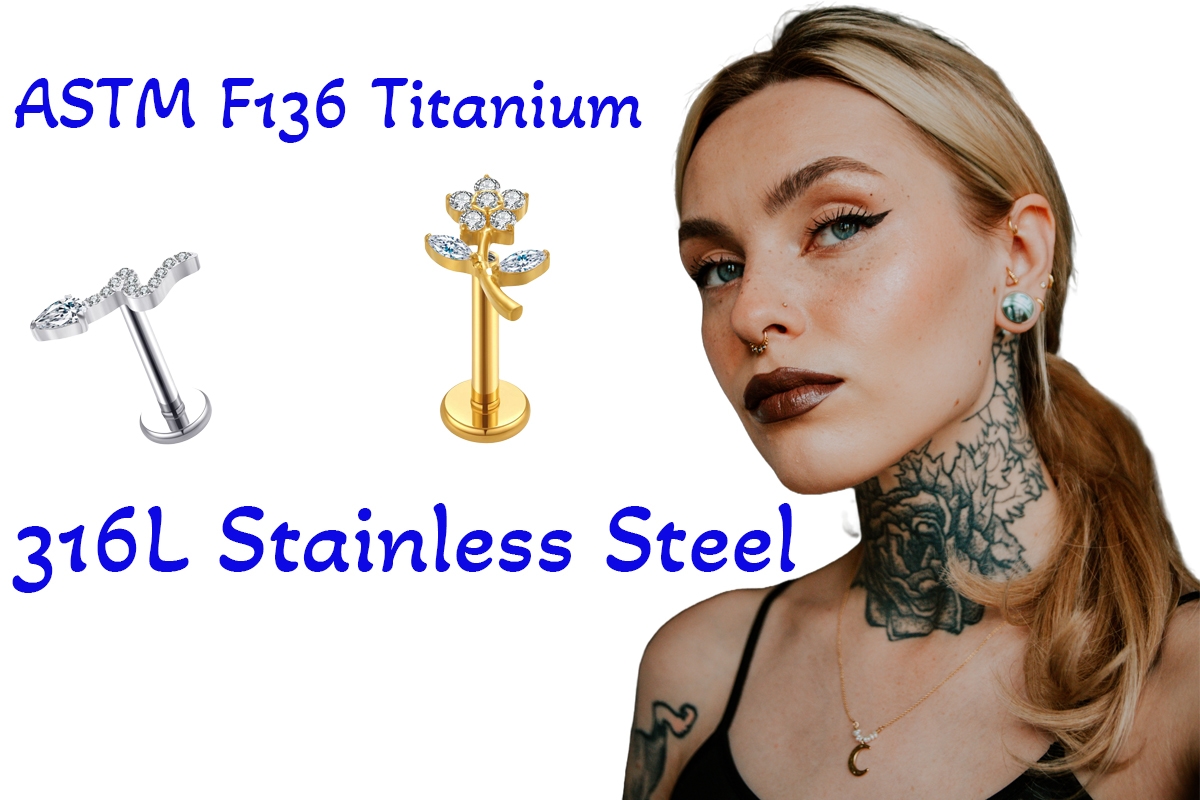
Einführung: Titan kostet dreimal mehr als Stahl – ist es den Aufschlag für Ihre Kunden wert??
Wir fertigen beides. Täglich, Unsere CNC-Maschinen schneiden ASTM F-136-Titan und 316L-Chirurgiestahl in Labrets, Langhantel, Clicker, und Nasenringe. Deshalb haben wir bei diesem Rennen kein Pferd dabei – wir verkaufen beide Materialien, und wir sagen Ihnen ehrlich, wann jeder einzelne Sinn ergibt.
Die Kurzversion für Piercing-Studio-Besitzer und -Händler:
• Verkaufe Titan für: frische Piercings, Nickelempfindliche Kunden, jedes Piercing, das farbig eloxiert werden muss
• Verkaufe 316L-Stahl für: budgetfreundliche Optionen, verheilte Piercings, Industriehanteln, bei denen das Gewicht weniger wichtig ist
Der Rest dieses Leitfadens erläutert die Materialwissenschaft, die Kostenrechnung, and the real-world wear data from our clients’ feedback across 30+ Länder.
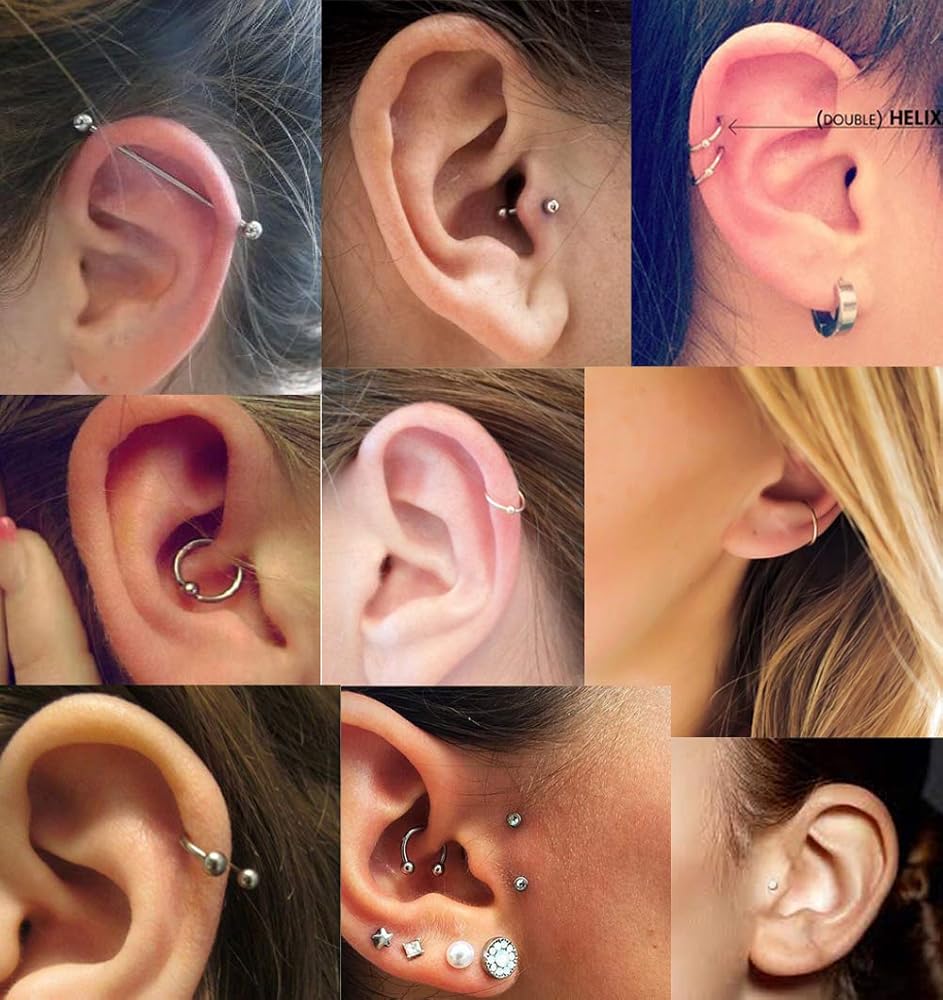
Materialoptionen im Überblick – Was bei Piercingschmuck tatsächlich funktioniert
Nicht jedes Material gehört in ein frisches Piercing. Hier ist die Auswahlliste dessen, was wir tatsächlich empfehlen, basierend auf einem Jahrzehnt Erfahrung in der Herstellung und Kundenfeedback:
ASTM F-136 Titan (G23) — Qualität für medizinische Implantate. Kein Nickelrisiko. Kann eloxiert werden 30+ Farben. Kostet mehr, aber wir hatten noch nie eine nachgewiesene allergische Reaktion.
316L Operationsstahl (ASTM F-138) – Arbeitstier der Branche. Tolles Verhältnis von Haltbarkeit zu Kosten. Enthält 10-14% Nickel, was in etwa Reaktionen auslöst 1-2% der Träger. Immer noch die preiswerteste Option für verheilte Piercings.
18K-Gold / 925 Silber — Wir empfehlen diese nicht für Erstpiercings. Goldlegierung enthält Nickel. Silber läuft an und kann Argyrie verursachen. Gut für geheilte Ohren, nicht für frische Piercings.
Was unsere CNC-Bediener als Erstes an Titan bemerken
Titan lässt sich anders bearbeiten als Stahl. Es ist gummiartiger und erzeugt beim Schneiden mehr Hitze, Das bedeutet, dass der Werkzeugverschleiß höher ist und die Vorschübe angepasst werden müssen. Deshalb haben billige Titanschmuckstücke oft ein raues Gewinde: Die Fabrik sparte bei den Werkzeugkosten.
Wo Titan wirklich gewinnt:
• Erste Piercings. Das geringere Gewicht bedeutet eine geringere Schwerkraft auf ein frisches Piercing. Kunden mit Titan-Labrets berichten in unseren Nachuntersuchungen durchweg von einer schnelleren Heilung.
• Farbe ohne Beschichtung. Beim Eloxieren von Titan entsteht eine Oxidschicht, die Teil des Metalls ist – keine Beschichtung. Es wird nicht abplatzen, schälen, oder Flocken. Wir bieten an 30+ eloxierte Farben, von Roségold über tiefes Lila bis hin zu Tiefschwarz.
• Nickel-Sicherheitsgarantie. Bei weniger als 0.05% Nickelgehalt, Wir hatten noch nie eine nachgewiesene allergische Reaktion auf unser F-136-Titan.
Wo Titan zu kurz kommt:
• Es kratzt. Eine täglich getragene Industrie-Langhantel weist Mikrokratzer im Inneren auf 6-12 Monate. Stahl behält seinen Glanz länger.
• Es kostet 30-50% mehr im Einzelhandel. Für preisbewusste Produktlinien, Diese Marge ist wichtig.
316L Steel Is the Workhorse of the Piercing Industry — Here’s Why
Wo Stahl wirklich gewinnt:
• Verhältnis von Haltbarkeit zu Kosten. Eine industrielle Langhantel aus 316L hält jahrelanger täglicher Beanspruchung stand und behält ein spiegelndes Finish. Für den Preis, Es gibt keinen besseren Wert.
• Gewichtsgefühl. Manche Kunden bevorzugen die schwerere Haptik – sie signalisiert Qualität. Bauchringe und Industrieringe aus Stahl wirken substanzieller.
• Bessere Kratzfestigkeit. Die höhere Härte von Stahl widersteht Oberflächenabrieb besser. Für Schmuck, der häufig Stößen ausgesetzt ist, Stahl hält optisch.
Wo Stahl Probleme macht:
• Die Nickelfrage. 316L enthält 10-14% Nickel. Die meisten Menschen vertragen es gut. Aber bei frischen Piercings – insbesondere Knorpel- und Nasenpiercings – führt der geringere Nickelgehalt von Titan zu messbar besseren Heilungsergebnissen. If a client says they react to “cheap jewelry,” they’re almost certainly reacting to nickel migration from steel.
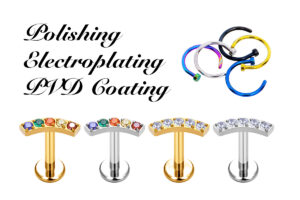
• Keine Farbanpassung. Stahl kann nicht eloxiert werden. Farbiger Stahl ist entweder PVD-beschichtet oder galvanisiert – beides nutzt sich ab. Wir haben schon erlebt, dass Kunden PVD-beschichtete Teile danach zurücksendeten 3 Monatelanges tägliches Tragen mit sichtbarem Ausbleichen an den Kontaktstellen.
• Schwerer = mehr Durchhang. Eine gebogene Hantel aus Stahl in einem Bauchnabelpiercing übt mehr Druck nach unten aus als Titan. Für Kunden mit dünnem Gewebe oder heilendem Nabel, Titan ist sicherer.
Vergleich: ASTM F136 Titan vs. 316L Edelstahl
Während beides ASTM F136 Titan Und 316L Edelstahl sind hervorragende Materialien für Piercingschmuck, Es gibt bestimmte Unterschiede, die dazu führen können, dass das eine für bestimmte Anwendungen besser geeignet ist als das andere. Hier ist ein kurzer Vergleich:
| Eigentum | ASTM F136 Titan | 316L Edelstahl |
|---|---|---|
| Korrosionsbeständigkeit | Exzellent, hohe Korrosionsbeständigkeit, insbesondere in Körperflüssigkeiten | Gut, kann aber unter bestimmten Bedingungen korrodieren, insbesondere mit Chloriden |
| Biokompatibilität | Hoch biokompatibel, Daher ist es ideal für Piercings und medizinische Implantate | Gut, kann aber bei empfindlichen Personen Reaktionen hervorrufen |
| Haltbarkeit | Sehr langlebig, beständig gegen Kratzer und Abnutzung | Langlebig, aber im Vergleich zu Titan weniger kratzfest |
| Gewicht | Leicht, was es bequem für längeres Tragen macht | Schwerer als Titan, was für einige Träger möglicherweise weniger bequem ist |
| Preis | Aufgrund der hohen Qualität des Materials und des Herstellungsprozesses teurer | Günstiger, Wird häufig für Massenmarktschmuck verwendet |
| Hypoallergene Eigenschaften | Im Allgemeinen hypoallergen, Ideal für Personen mit Metallempfindlichkeit | Gut, Bei einigen Benutzern mit einer Nickelallergie kann es jedoch zu Reaktionen kommen |
| Aussehen | Kann für eine große Auswahl an Farben und Oberflächen eloxiert werden | Kann für einen strahlenden Glanz poliert werden, glänzendes Aussehen, aber keine Farboptionen wie Titan |
So rüsten Sie Ihr Studio aus: B2B-Einkaufsratgeber zur Materialauswahl
Hier ist die Bestandsaufteilung, die für die meisten unserer B2B-Kunden funktioniert:
Lagern Sie mehr Titan, wenn:
• Ihr Kundenstamm tendiert zu Erstpiercings
• Sie positionieren Ihre Marke als Premium / hypoallergen
• Sie möchten farbigen Schmuck ohne Risiko von Beschichtungsfehlern anbieten
• Ihre Kunden haben über Nickelunverträglichkeiten bei anderen Marken berichtet
Lagern Sie ggf. mehr 316L-Stahl:
• Sie bauen ein Einstiegsmodell / Budget-Produktlinie
• Industrielle Hanteln und schwere Hanteln sind Ihre Bestseller
• Ihre Kunden legen Wert auf Kratzfestigkeit gegenüber Gewichtseinsparungen
• Sie müssen die Einzelhandelspreise wettbewerbsfähig halten
Der Sweetspot: Die meisten unserer B2B-Kunden bestellen a 60-40 Teilt - 60% Titan, 40% Stahl. Das verschafft Ihnen die Premium-Positionierung von Titan und hält gleichzeitig die durchschnittlichen Bestellkosten überschaubar. Wir haben gesehen, dass dieses Verhältnis in allen Piercingstudios in den USA funktioniert, Europa, und Australien.
Beide Materialien funktionieren – die Frage ist, welches zu Ihrer Produktlinie passt
Wir stellen beide Materialien her – in derselben Fabrik, gleiche CNC-Maschinen, dasselbe Polierteam, gleiche QC-Standards. Wenn Sie einen Bestand an Piercingschmuck aufbauen und unvoreingenommene Beratung zur Materialauswahl wünschen, Unser B2B-Team kann Sie durch die Kostenanalyse begleiten.
Anfrage:
• Großhandelspreisliste (Titan + Stahl – Seite an Seite)
• Materialvergleichs-PDF mit vollständigen technischen Spezifikationen
• Kostenloses Musterpaket (Mischung aus beiden Materialien)
Wholesale Titanium and Steel Jewelry from Sensagem
Looking for a reliable titanium body jewelry manufacturer? Explore our wholesale titanium and steel collections or contact our team for OEM & private label support.
Explore Wholesale Collections · Contact Our Team
FAQs von B2B-Käufern
Ist ASTM F136 Titan besser als 316L Edelstahl??
Die meisten Studios führen 60% titanium and 40% Stahl. Titanium deckt frische Piercings und empfindliche Kunden ab, while steel covers the budget-conscious segment. Für beide bieten wir Großhandelspreise an, with a MOQ of 10 Stück pro SKU für vorrätige Modelle.
Kann ich Edelstahl 316L für alle Arten von Piercings verwenden??
Ja. We send free samples to qualified B2B buyers — a mix of titanium and steel, Ihre Auswahl an Stilen. You can verify the quality, beenden, und fühlen Sie sich wohl, bevor Sie eine Großbestellung aufgeben.
How do I know if a supplier’s “titanium” jewelry is real ASTM F-136?
Fordern Sie den Mühlentestbericht an (MTR). Jeder Charge von Original-F-136 liegt ein Zertifikat bei, das die chemische Zusammensetzung dokumentiert. Wir legen jeder Sendung eines bei. Gefälschtes Titan ist in dieser Branche ein echtes Problem – das MTR ist Ihr einziger zuverlässiger Nachweis.
Indem Sie diese Richtlinien befolgen und die richtigen Materialien für Piercingschmuck auswählen, Sie können Ihren Kunden ein positives Erlebnis bieten und die hohen Standards Ihrer Marke aufrechterhalten.
F136 Titanium vs 316L: Am besten für Piercingschmuck geeignet · Piercing Jewelry Certification Guide